


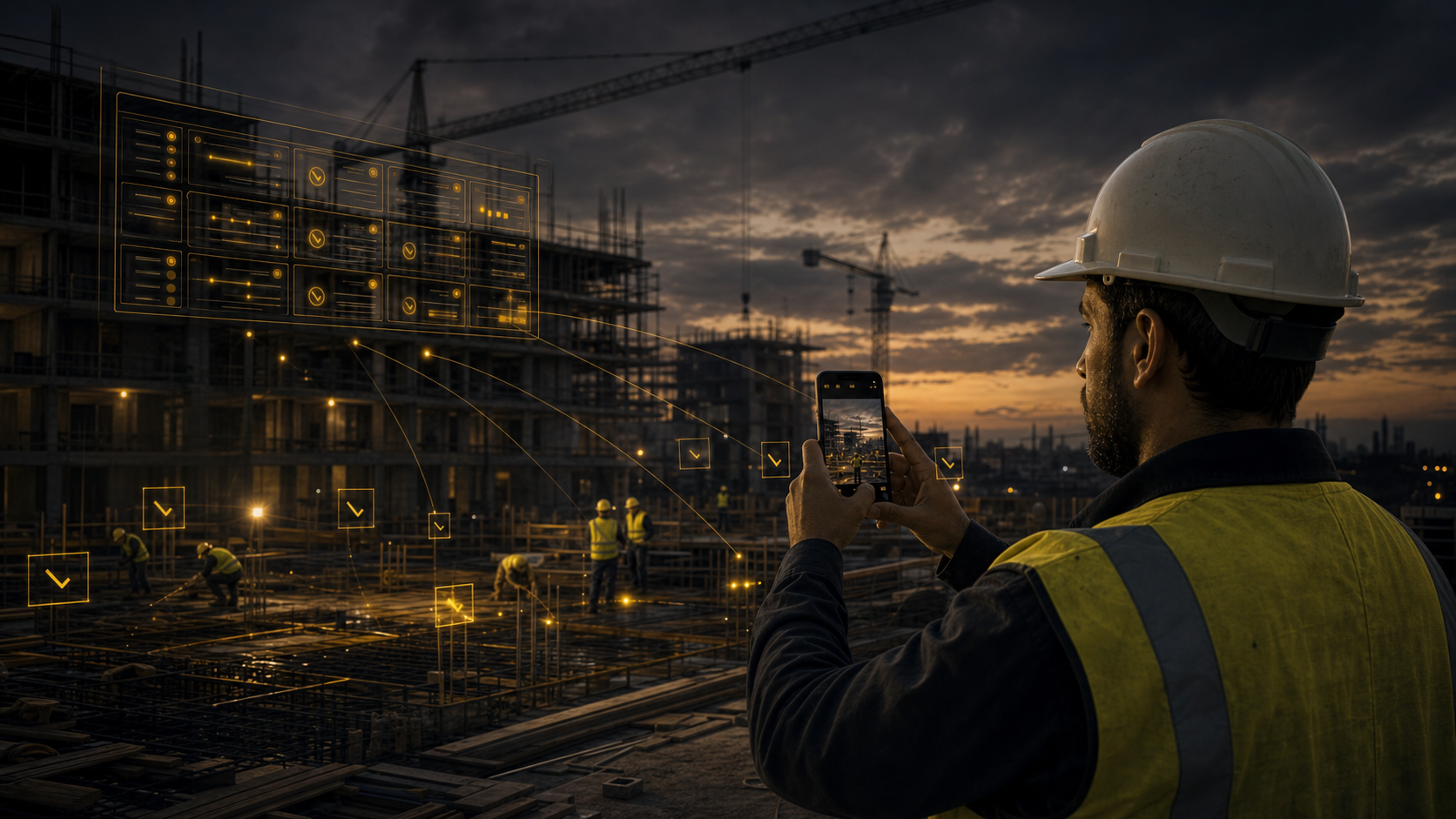
People naturally work under pressure, routines, and impulses that often pull them away from the goals they set for themselves, if they define those goals at all. This is one of the reasons why method and structure matter so much. A working method does not remove pressure, but it helps people realign with the right standard again and again.
Measurement at several points during the day creates a practical framework. It makes expectations more concrete, less abstract, and easier to revisit during real work. When that measurement is visual, and when teams know that what they do will be seen and discussed, the level of commitment becomes much deeper than simply receiving guidance and occasionally trying to apply it.
Visual reporting creates a shared language between managers and the field. It allows people to see what was prepared, how communication took place, whether the routine was carried out seriously, and where improvement is required. This turns reporting from a passive record into an active management tool.
Excellence Requires More Than Slogans
A company that declares excellence must also operate in that spirit. Excellence cannot live only on large signs, posters, or formal statements. It has to appear in the daily rhythm of work, in the standards that are measured, and in the seriousness with which leaders respond to what they see.
One of the central elements of excellence is continuous improvement. The goal is always to become slightly better than yesterday. A systematic measurement process, especially when managers participate in the act of measurement and are not only measuring others, creates the conditions for that improvement to happen.
Measurement, Participation, and Feedback
When teams receive feedback almost every day, the site begins to develop infrastructure: a common language, clearer expectations, more opportunities for correction, and more opportunities for reinforcement. Over time, this creates an environment where improvement is no longer occasional. It becomes part of the operating system.
Of course, none of this works automatically. Leadership is still required. Managers still need to identify empty reporting, break routine when needed, and insist that the process remains meaningful rather than ceremonial. But even then, the existence of a consistent framework is critical. It creates the foundation on which better habits, better conversations, and better performance can grow.
Visual reporting is therefore not only a documentation tool. It is part of a disciplined management method that helps construction organizations create alignment, commitment, and continuous improvement in the field.